Construction is an industry that has changed enormously with the arrival of new technologies. One of the most notable innovations in recent years is the use of audiovisual monitoring on job sites. This advancement not only improves efficiency and accuracy, but also optimizes resource management and communication among the teams involved. In this article, we explore how audiovisual monitoring is revolutionizing construction and the many benefits it offers.
Benefits of Audiovisual Monitoring in Construction
Efficiency and Productivity Gains
Audiovisual monitoring enables constant supervision of construction progress in real time. Cameras installed on the job site capture images and videos that project managers can analyze. This makes it easier to identify potential problems before they become significant obstacles, enabling fast and efficient decision-making. Visual documentation also helps coordinate daily tasks more effectively, optimizing the use of labor and materials.
Quality Control
Quality is a crucial aspect of any construction project. With audiovisual monitoring, supervisors can track adherence to established quality standards without needing to be physically present on site. High-definition recordings allow for a detailed inspection of each stage of the project, ensuring that specifications and regulations are met. This reduces the likelihood of costly errors and rework.
Workplace Safety
Safety is a priority in construction, and audiovisual monitoring plays a vital role in this area. Surveillance cameras help identify unsafe practices and enable immediate corrective action. They also allow incidents to be reviewed to understand their causes and prevent future accidents. By promoting a safe working environment, both workers and company resources are protected.
Transparency and Communication
One of the most significant advantages of audiovisual monitoring is the improvement in transparency and communication. Clients and other stakeholders can access recordings to see the progress of the project, which builds trust and confidence. This transparency also facilitates dispute resolution, since all activities are visually documented.
Integration with Other Technologies
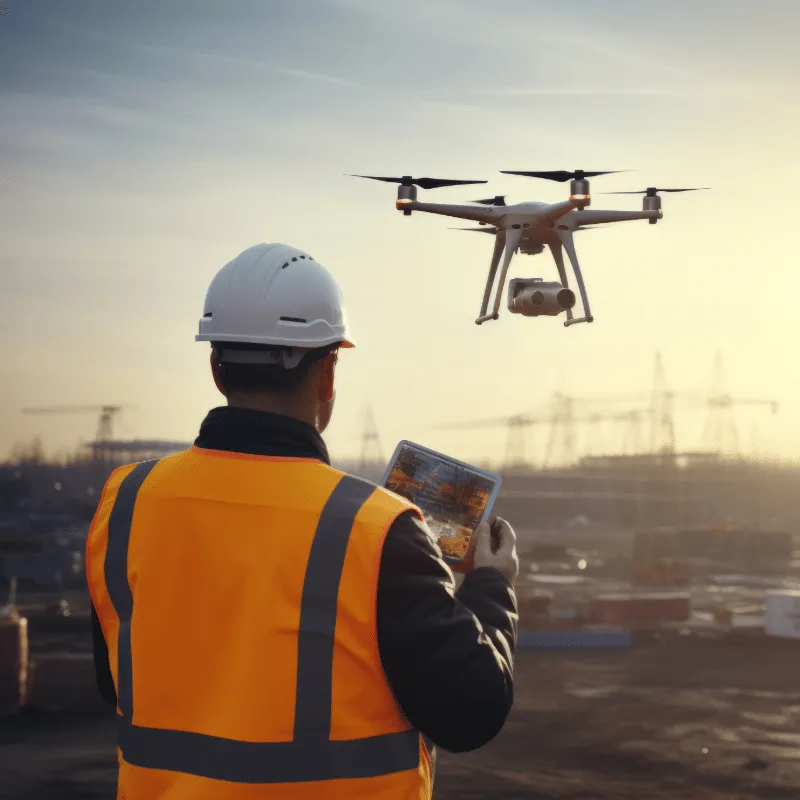
Audiovisual monitoring can be integrated with other emerging technologies in construction, such as Building Information Modeling (BIM) and drones. Drones equipped with cameras can provide detailed aerial views of the site, complementing images captured from the ground. Integration with BIM also enables better planning and progress tracking by comparing real-world data with digital models.
Case Studies and Real-World Applications
Urban Infrastructure Project
In an urban infrastructure project (such as the construction of a new subway line), audiovisual monitoring has proven invaluable. Cameras installed along the route allowed project managers to monitor progress at multiple locations simultaneously. This not only accelerated decision-making but also ensured that all stages were completed on schedule and within budget.
Commercial Building Construction
In the construction of a commercial high-rise, the use of drones for audiovisual monitoring provided unique perspectives that facilitated inspection of hard-to-reach areas. Aerial recordings made it possible to detect and correct structural issues before they became major challenges. These images were also shared with investors, providing clear, detailed visual updates on project progress.
Challenges and the Future of Audiovisual Monitoring in Construction
Current Challenges
Despite its many benefits, audiovisual monitoring in construction faces certain challenges. Privacy and data protection are important concerns, as recordings may contain sensitive information. In addition, implementing and maintaining advanced audiovisual systems requires significant investment and trained personnel.
Future Trends
The future of audiovisual monitoring in construction is promising. With the continued advancement of artificial intelligence and machine learning, video analysis capabilities will improve, enabling even faster problem identification and resolution. Augmented and virtual reality technologies will also be integrated, providing detailed, accurate visual simulations that will facilitate planning and training.
Conclusion
Innovation in construction through audiovisual monitoring is transforming the way construction projects are managed and executed. From improving efficiency and productivity to ensuring safety and quality, this technology offers a range of benefits that make construction more effective and transparent. As technology continues to advance, audiovisual monitoring will become an even more integral tool in modern construction.
Get your free Trowel trial
We recommend taking advantage of a free trial of Trowel. You can experience first-hand the benefits of this software and determine whether it is the best fit for your company. You can request your free trial of Trowel.