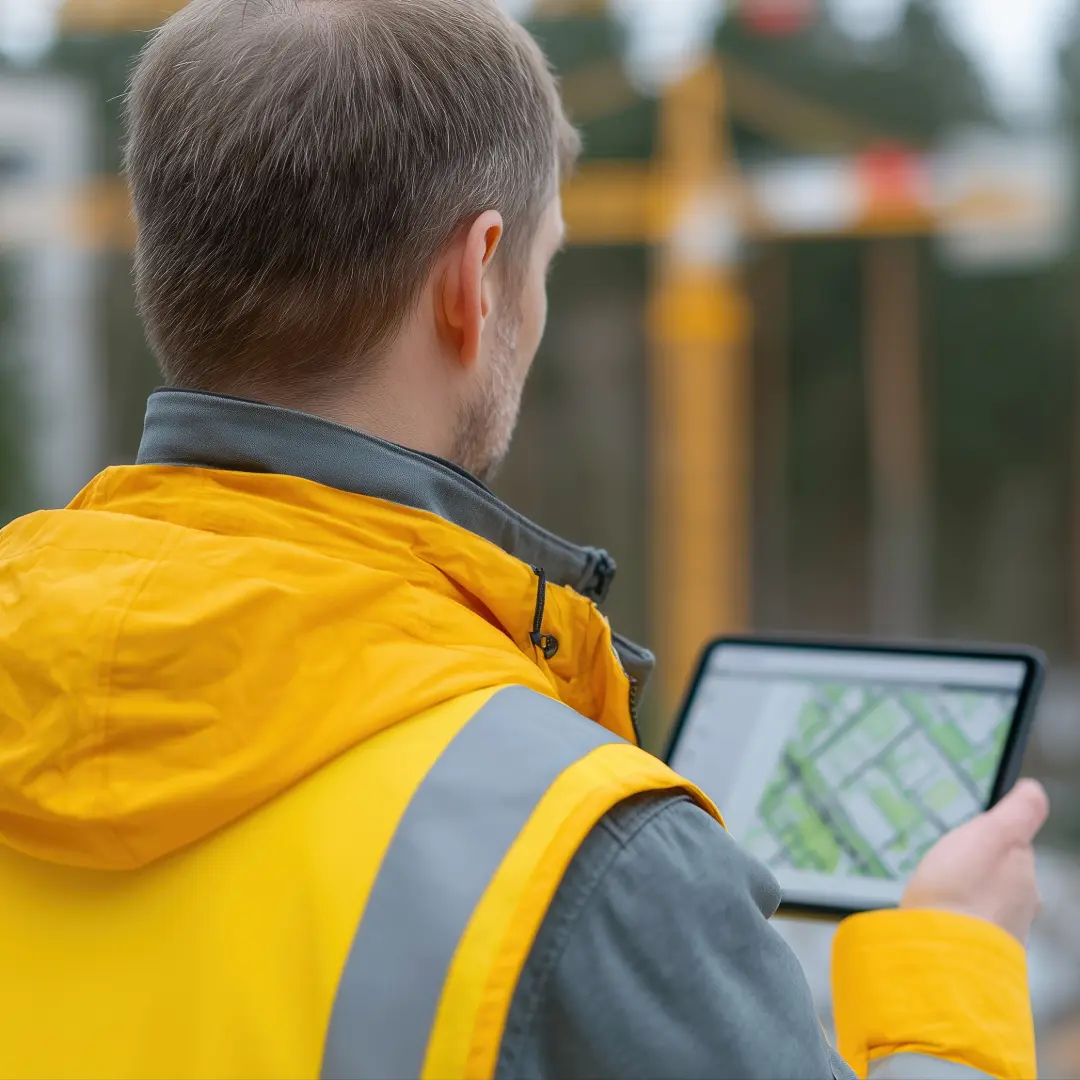
Technology tools on construction sites (drones, IoT sensors, and project management software) are transforming the way Spanish construction firms plan, execute, and control their projects. In this guide you will find a practical comparison of the main solutions available in the domestic market. You will also find recommendations for each type of company.
- The digitalization of construction in Spain
- Drones on site: models, providers, and comparison
- IoT sensors: types, applications, and platforms
- Construction management software: ERP and detailed comparison
- Conclusions
1. The digitalization of construction in Spain
The Spanish construction sector is undergoing an unprecedented technological transformation. The very companies that a decade ago managed projects with spreadsheets are changing. They are now incorporating mapping drones, sensors embedded in concrete, and cloud-based ERP platforms accessible from the site manager's phone.
The push is not solely internal. Several outside forces are driving construction companies to pursue operational efficiencies through technology. These include the arrival of Next Generation EU funds, pressure from major developers to reduce schedule and cost overruns, and a shortage of skilled labor.
Example of how we might present the information
119,712 Registered drone operators in Spain (AESA, 2024)
During 2025, 30,620 new UAS operators were registered with AESA, a 26% increase over the previous year.
€700M Value of the drone services market in Spain
€1,220M Projected economic impact by 2035 according to industry forecasts
According to the Agencia Estatal de Seguridad Aérea (AESA) (Spanish Aviation Safety Agency), Spain has 119,712 registered drone operators. More than 1,500 companies use them for industrial inspection, construction, and logistics. Specifically, during 2025, 30,620 new operators were registered, a 26% increase over the previous year. This reflects the rapid adoption of this technology in construction.
2. Drones on site: models, providers, and comparison
The use of drones in construction goes far beyond aerial photography. On site, they are used primarily for three main purposes: topographic surveys and 3D mapping, progress monitoring and control, and safety supervision and inspection of hard-to-access elements.
What type of drone does a Spanish construction firm need?
Not every project requires the same equipment. The choice depends on the size of the site, the frequency of flights, and the type of data needed. Here are the most common profiles:
|
Model |
Main use |
Flight time |
GPS accuracy |
Approx. price |
Profile |
|
Topography |
55 min |
±1 cm RTK |
~€10,000 |
Large site | |
|
Thermal inspection |
41 min |
±1.5 cm RTK |
~€9,200 |
Versatile | |
|
Monitoring / photography |
45 min |
±10 cm GNSS |
~€3,400 |
SME | |
|
ATyges Topodron FV8 |
Large-scale mapping |
~60 min |
±2 cm (relative) |
On request |
Domestic |
|
VTOL mapping |
55 min |
±1 cm PPK |
~€15,000 |
Civil engineering | |
|
senseFly eBee X |
Outdoor surveys |
90 min |
±3 cm RTK |
~€18,000 |
High precision |
Subcontracted drone services: the most agile option
Companies such as DRONING, registered as operators by AESA, offer specialized video and aerial photography services for engineering and construction. Their drones are equipped with HD/4K cameras and thermographic sensors for façade and infrastructure inspections. For construction firms that do not want to invest in their own equipment, outsourcing flights to a certified operator can be the most efficient option. You pay per flight or per project, with no in-house pilot required.
ATyges, a domestic manufacturer, also offers its Topodron system to meet the need for professional aerial topography. It gives surveyors a tool capable of capturing topographic data over areas of up to 1,500 hectares in three working days.
3. IoT sensors: types, applications, and platforms
The Internet of Things on the job site is not science fiction: it is a network of small devices that continuously measure, record, and transmit data. Their real impact is felt when they are integrated into decision-making processes.
Main sensor types and their applications on site
|
Sensor type |
What it measures |
Application on site |
|
Temperature and humidity |
Temp, ambient RH |
Concrete curing, working conditions, warehouses |
|
Concrete maturity (CoSMoS) |
Internal temperature + strength |
Curing control to optimize formwork removal |
|
Inclinometer / deformation |
Displacement, angle |
Structural monitoring of retaining walls and embankments |
|
Corrosion and carbonation |
Interior moisture + electrical potential |
Reinforced concrete structures, bridges, tunnels |
|
Vibrations (seismometer) |
Acceleration, frequency |
Protection of adjacent buildings during demolitions and piling |
|
Noise level |
dBA / dBC |
Compliance with municipal noise ordinances |
|
Gas / dust detection |
CO, CO2, PM particles |
Tunnels, parking garages, poorly ventilated areas |
|
GPS and location |
GNSS position |
Tracking of machinery, materials, and personnel |
4. Construction management software: ERP and detailed comparison
Construction management software is the digital backbone that gives coherence to all other technologies. Without a platform that centralizes budgets, progress certifications, cost control, and documentation, data from drones and sensors remains siloed. Spanish construction companies have several mature options at their disposal. These range from purely domestic solutions to international ones adapted to the local market.
|
Software |
Type |
Main strength |
Cloud / Local |
Profile |
|
Comprehensive ERP |
Modern, intuitive interface. Full site management + mobility, BC3 |
Cloud |
Recommended SME to Large enterprise | |
|
ERP + budgeting |
Modern interface, 1-click measurements, price database |
Cloud |
SME | |
|
Menfis 10 |
Measurements and budgets |
Simple, imports from Excel, certifications, basic BIM |
Local |
Small business |
|
Project management |
Collaboration, documentation, real-time field-to-office sync |
Cloud |
Large enterprise | |
|
BIM + management |
BIM 360, RFIs, issues, Revit/Navisworks integration |
Cloud |
BIM · Large site |
Cloud ERP vs. local software: what to choose in 2025?
Cloud software enables remote work and real-time information access, which is especially useful on projects with multiple locations. The cloud solution is the recommended option for construction firms with geographically dispersed site teams. It also fits cases where the developer or project management team needs access to data. Local software remains valid for technical offices that work primarily from a single machine.
Recommended reading: The 10 best software tools for construction in 2025
5. Conclusions
In conclusion, technology tools on the job site have ceased to be a luxury for large construction firms. They have become an operational necessity. Companies that have already made the leap report clear improvements in three areas: reduced schedule and cost overruns, greater workplace safety, and better client reporting.
Furthermore, the ecosystem of available solutions in Spain is today solid and mature. Construction companies have purpose-built tools at their disposal with Spanish-language support and competitive pricing. These range from domestic manufacturers of drones and sensors such as ATyges, CoSMoS, or S-Connect to construction-focused ERPs like Trowel or Planhopper.
Therefore, the recommendation is clear: start with construction management software, then move on to drones, and finish with IoT sensors. That sequence minimizes investment risk and, above all, maximizes the likelihood that the team will successfully adopt the tools.