Introduction
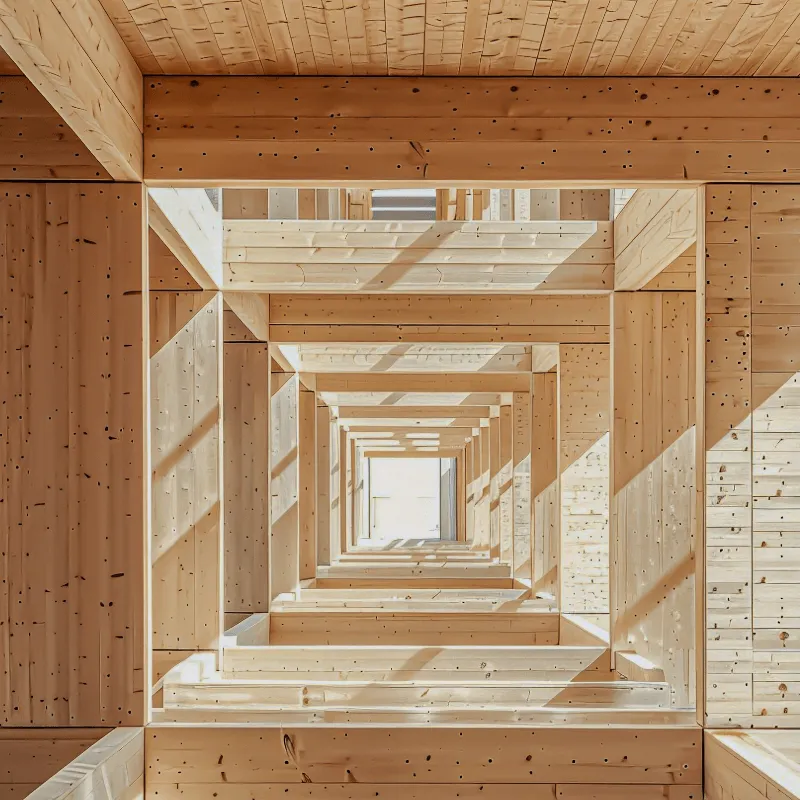
Cross-Laminated Timber, known as CLT, is an innovative construction material. It is composed of layers of wood arranged in perpendicular directions. This design provides exceptional strength and stability, enabling its use in large architectural projects. CLT has revolutionized modern construction thanks to its environmental and structural benefits.
What is Cross-Laminated Timber (CLT)?
CLT is an engineered wood product made up of several layers of solid timber. These layers are stacked at right angles and bonded with special adhesives. The result is an incredibly strong and stable material. CLT is used in walls, roofs, and floors, offering a sustainable alternative to traditional materials.
Historical Development of CLT
Cross-laminated timber has its roots in Europe, where it was developed in the 1990s. Since then, its popularity has grown globally, driven by demand for sustainable building materials. Technological advances have improved its production and applications, making CLT a viable and efficient option for many types of buildings.
The CLT Manufacturing Process
The CLT manufacturing process involves the selection of high-quality timber. The wood boards are cut, dried, and graded before being assembled into perpendicular layers. These layers are bonded with structural adhesives and pressed to form solid panels. Finally, the panels are cut and customized according to project specifications.
Advantages of Cross-Laminated Timber
CLT offers multiple advantages. Its production uses sustainable timber, reducing environmental impact. Prefabricated panels facilitate faster and more efficient construction. CLT also provides excellent fire resistance, thermal and acoustic insulation, and notable structural stability.
Structural Strength and Stability of CLT
CLT's layered structure gives it superior strength. It can support heavy loads, making it ideal for tall buildings and bridges. Its dimensional stability also minimizes the risk of warping and cracking, ensuring long-term durability.
Environmental Benefits of Using Cross-Laminated Timber
CLT is an eco-friendly choice. The timber used comes from sustainably managed forests. Furthermore, the production process generates fewer carbon emissions compared to steel and concrete. Using CLT contributes to buildings with a lower carbon footprint.
CLT in Modern Architecture
Thanks to its versatility, CLT can be used in a wide variety of architectural designs. From residential to commercial and educational buildings, CLT adapts to different needs. Its natural aesthetic also adds warmth and beauty to spaces, making it a preferred material among many contemporary architects.
Notable CLT Projects Around the World
Some landmark projects using CLT include Brock Commons Tallwood House in Canada and Stadthaus in London. These projects demonstrate CLT's ability to be used in tall and complex constructions. The global adoption of CLT continues to grow, showcasing its potential and effectiveness.
CLT vs. Traditional Construction Materials
Compared to traditional materials such as concrete and steel, CLT offers unique benefits. It is lighter, which makes transportation and installation easier. In addition, its production consumes less energy and is more environmentally friendly. CLT also provides better thermal and acoustic insulation.
Fire Resistance of Cross-Laminated Timber
Despite being a wood-based material, CLT has remarkable fire resistance. The surface charring of the outer layers acts as a protective barrier. This allows CLT structures to maintain their integrity for longer in the event of a fire, increasing building safety.
Acoustic Performance of CLT
CLT offers excellent acoustic properties. Its layered structure helps reduce sound transmission, providing better acoustic insulation. This makes it ideal for buildings where noise control is crucial, such as offices and multi-family residential developments.
Impact on the Local Economy
The use of CLT can have a positive impact on the local economy. The production and processing of CLT generates employment in the timber and manufacturing industries. It also encourages the development of skills and technology in the construction sector, driving regional economic growth.
Thermal Performance of CLT
CLT provides excellent thermal insulation. Its ability to retain heat reduces the need for heating and cooling, which translates into energy savings. This makes it an efficient and sustainable option for the construction of energy-efficient buildings.
Adaptability and Versatility of CLT
Cross-laminated timber is extremely adaptable. It can be used in a variety of applications, from residential homes to large commercial and industrial structures. Its ability to be prefabricated in different shapes and sizes allows for great flexibility in design and construction.
Innovation and Technology in CLT Production
Technology in CLT production continues to advance. New manufacturing methods and stronger adhesives have improved the quality and structural properties of CLT. These innovations enable its use in increasingly large and complex projects, expanding its possibilities in modern construction.
Cost Comparison: CLT vs. Other Materials
The cost of cross-laminated timber can be competitive compared to other construction materials. Although the initial cost may be higher, the long-term benefits — such as faster construction and energy savings — can offset the initial investment. Furthermore, reduced transportation costs and ease of installation can lower overall project expenses.
Impact on Health and Well-Being
The use of cross-laminated timber in construction can have benefits for health and well-being. Wood is a natural material that can improve indoor air quality. In addition, the warm and welcoming environment created by wood can have positive effects on the emotional and psychological well-being of occupants.
Case Studies: CLT Success Stories in Construction
There are numerous case studies that demonstrate the success of CLT in construction. These include residential, commercial, and educational buildings that have used CLT to take advantage of its structural and environmental benefits. These case studies highlight how CLT can be used in a variety of applications with positive results.
Maintenance and Durability of CLT
Cross-laminated timber is durable and requires minimal maintenance. Its resistance to warping and ability to support heavy loads contribute to its longevity. With proper care, CLT structures can maintain their integrity for decades.
CLT and Building Regulations
Building regulations for CLT are evolving as its use expands. Many countries are developing specific codes and standards to ensure the safety and performance of CLT structures. These regulations help promote the adoption of CLT in modern construction.
Expert Opinions on CLT
Experts in the construction industry recognize the benefits of Cross-Laminated Timber (CLT). Architects, engineers, and builders highlight its versatility, sustainability, and structural properties. The positive opinions of industry professionals support the growing use of CLT in construction projects.
Myths and Realities of CLT
There are several myths about CLT that need to be debunked. Despite being a wood-based material, CLT has excellent resistance to fire and pests. It is also stronger and more durable than many people believe. Dispelling these myths helps promote an accurate understanding of the benefits of CLT.
The Future of CLT in the Construction Industry
The future of CLT in construction is promising. With continuous advances in technology and growing demand for sustainable materials, CLT is well positioned to play a key role in the construction of the future. Its ability to combine sustainability, performance, and aesthetics makes it an ideal option for a wide range of projects.