In Mexico's regulatory environment, irregular subcontracting is no longer an option: with the 2021 labor reform, the REPSE —Registro de Prestadoras de Servicios Especializados u Obras Especializadas (Registry of Specialized Service and Works Providers)— is the key mechanism for operating legally. This article is your definitive REPSE guide, updated for 2025–2026: from its definition and legal framework, to how to register, ongoing obligations, and concrete examples in the construction and IT sectors. If you want to avoid multi-million-peso fines and protect your business, keep reading.
What is REPSE?
REPSE is an official registry administered by the STPS (Secretaría del Trabajo y Previsión Social, Mexico's labor authority) that regulates companies providing specialized services or works and supplying personnel to a third party. Its main objective is to eradicate fraudulent subcontracting and ensure that workers' labor rights and tax obligations are protected.
The regulation requires that these services not form part of the contracting party's main business activity (i.e., they must be genuinely specialized), and that the provider be registered in the registry.
Legal Framework and Regulatory Foundations
| Key Provision | Reference | Direct Implication for Your Business |
|---|---|---|
| Mandatory Registration | Art. 15 | If you provide specialized services using your own personnel, you must hold a current REPSE registration to operate legally. |
| Definition of Specialization | Art. 15-A | The subcontracted service cannot form part of your company's main business activity; it must be justified by its specialized nature. |
| Mandatory Verification | Art. 15-B | As the contracting party, you must verify that your REPSE-registered provider has its own resources and is current with its labor and tax obligations. |
| Joint Liability | Consequence | If the REPSE provider fails to meet its obligations (IMSS, SAT, INFONAVIT), your company may be held jointly liable and required to pay those debts. |
- Ley Federal del Trabajo (LFT), Article 15 and amendments: Establishes the prohibition on subcontracting activities that form part of a company's corporate purpose and mandates REPSE registration.
- Supplementary regulations and provisions: Published in the DOF (Diario Oficial de la Federación) to detail functions, deadlines, and sanctions.
- Related tax regulations: For purposes of deductions, SAT compliance, and obligations to IMSS and INFONAVIT.
- Official STPS guide: Document detailing obligations, forms, and procedures.
Who Must Register (and Who Doesn't)?
Required to register:
- Individuals or legal entities that provide specialized services or specialized works.
- Those that carry out these activities using their own personnel supplied to the contracting party.
- Those whose activities are not part of the client's primary line of business.
Exceptions or clarifications:
- Does not apply to services the client already provides as part of its normal operations.
- Special cases regulated by the STPS may have specific rules.
Step-by-Step Guide to Registering with REPSE
- Go to the official portal: repse.stps.gob.mx
- Identify yourself with the e.firma (electronic signature) of the legal representative.
- The system automatically validates compliance with IMSS, SAT, and INFONAVIT.
If everything is "positive," proceed.
If there are outstanding balances or inconsistencies, documents in PDF format are requested.
Enter your tax information, corporate purpose, legal representative, and services to be registered.
Complete the technical questionnaires for each service or works category.
Upload the required documents (PDF, required formats).
Await a decision: the STPS has 20 business days to issue the registration number.
If no response is issued within that period, a resolution may be requested within the following 3 days.
- Obtain your REPSE registration number and keep it on file for reference and notification to the contracting party.
Quarterly Obligations and Follow-Up Reports
Once registered, you must file quarterly informational reports with IMSS (ICSOE) and INFONAVIT (SISUB) that include:
- Current contracts for specialized services
- Payroll records for linked workers
- Payments made and withholdings applied
- Verification of tax and labor obligations
Non-compliance or late filing may result in penalties and could lead to loss of the current registration. sifo.com.mx
Key dates: from the 1st to the 17th of the month following each four-month period.
Joint Liability and Sanctions
Joint liability means that if your provider fails to meet its wage, social security, or benefits obligations, the authorities may come after you as the contracting party. Sanctions include fines that can run into the millions of pesos, depending on the duration of non-compliance, the number of workers omitted, and other factors.
It is critical to maintain constant oversight and require your provider to meet its obligations.
Construction Sector: The REPSE–SIROC Link
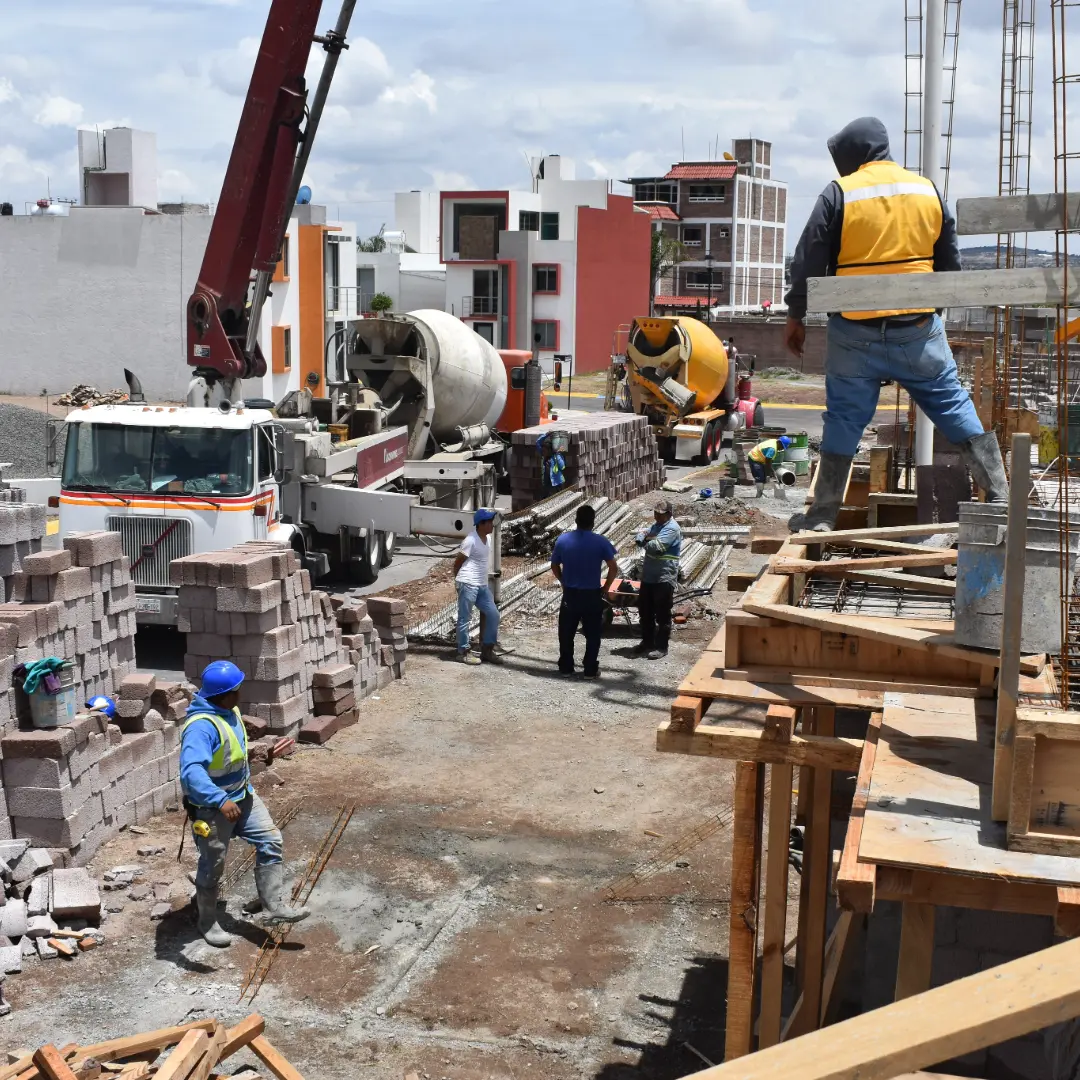
If your company operates in construction, compliance is twofold. The failure to properly link REPSE with SIROC (Sistema del IMSS para el Registro de Obras, IMSS's construction project registration system) is the greatest source of risk and fines in this sector.
REPSE and SIROC — a critical link in the construction sector:
- Contracting party obligation: When a construction company subcontracts a specialized work or service (e.g., electrical installation, foundation work) to a REPSE-registered provider.
- Mandatory notification: The construction company must register the REPSE number of the subcontractor in the SIROC record for that project.
This step is what ensures that the specialized provider is fulfilling its social security obligations for its workers on that specific project.
Consequences of failing to link the records.
Omitting or making errors in this linkage is not a simple administrative mistake; it is a legal and financial liability:
- Immediate Joint Liability: IMSS will go directly after the contracting construction company for the subcontractor's social security debts.
- Multi-Million Peso Fines: Fines imposed by the STPS (Secretaría del Trabajo y Previsión Social) and IMSS (Instituto Mexicano del Seguro Social) for regulatory non-compliance; under Article 1004-C of the Ley Federal del Trabajo, failure to comply with these provisions carries a fine of 2,000 to 50,000 times the Unidad de Medida y Actualización (UMA).
- Operational and Reputational Risk: Exposure to inspections and potential work stoppages, plus serious damage to corporate reputation.
- Risk of tax fraud liability. Companies or individuals that contracted those services will be unable to deduct or credit the payments made for the contracted works or services, according to the Servicio de Administración Tributaria (SAT).
Download Your Free Definitive REPSE Guide

Fill out the form below and discover everything you need to know with our Definitive and Updated 2025 Guide.
Conclusion
REPSE is not a one-time filing; it is ongoing compliance management that defines the legality and stability of your operations in México.
The bottom line for 2025 and 2026 is clear: liability is joint and immediate. It is not enough for your provider to hold a REPSE registration; as the contracting party, you must verify that they keep it current and, most importantly, that they are up to date with their tax and social security obligations (SAT, IMSS, INFONAVIT).
For companies in the construction sector, the stakes are doubly high: the correct linkage of REPSE with SIROC is the only safeguard against joint liability. An error or omission here can translate into multi-million peso fines and the suspension of your projects.
In a regulatory environment that leaves no room for mistakes, automation and rigorous document control are your best allies. Ensuring legal compliance not only prevents sanctions; it shields your reputation and guarantees business continuity.
Are your tools and processes ready to protect your operations and manage this critical risk proactively?