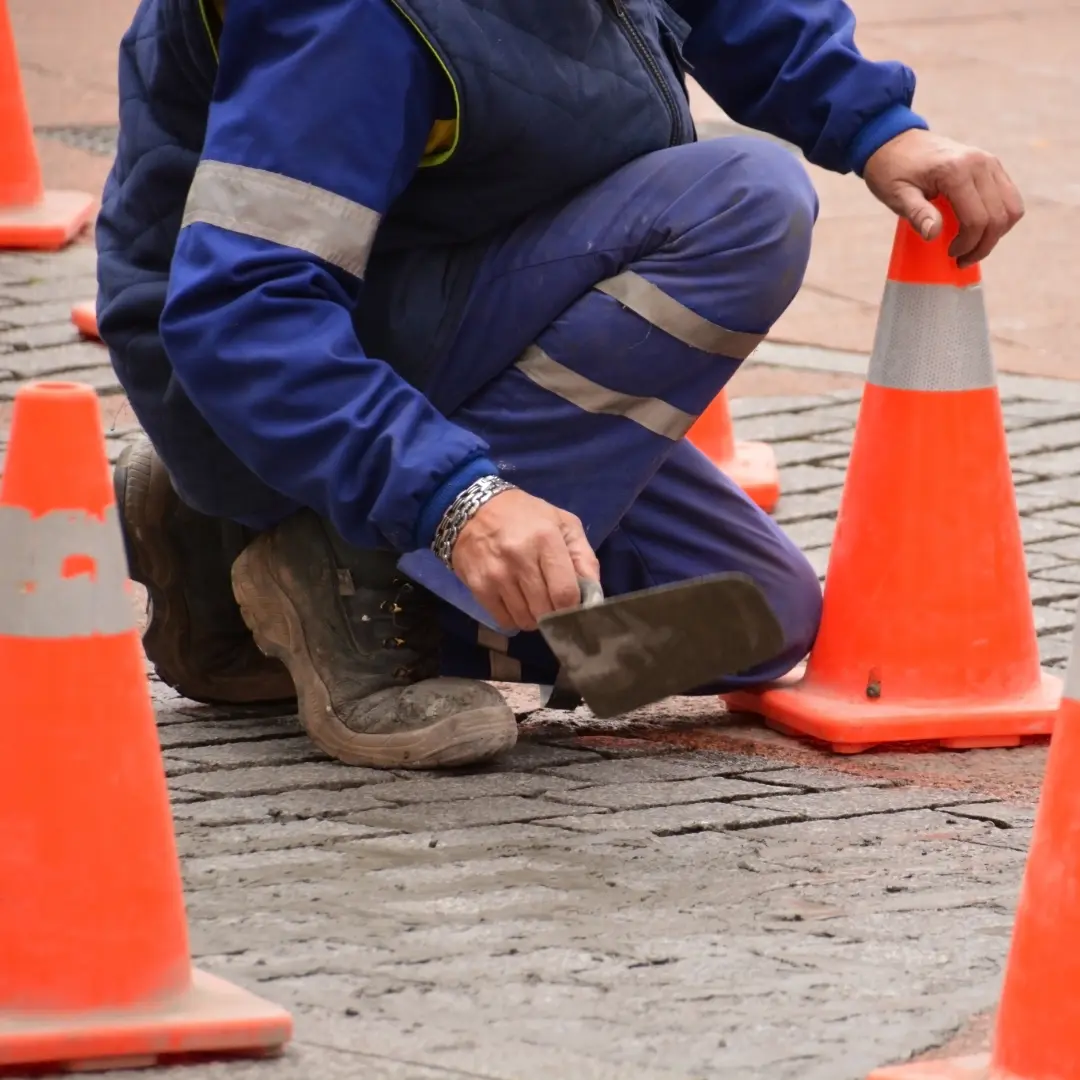
For anyone responsible for occupational health and safety in Mexican construction, NOM-033-STPS-2015 is not simply one more standard in the construction safety catalogue. It is one of the most demanding regulatory frameworks in México in technical, operational and documentary terms: the technical management of work in confined spaces under NOM-033-STPS-2015.
In this guide we review what the standard requires and, to make it concrete, we apply it step by step to a real case on site: waterproofing a water tank in a building under construction.
Identifying and classifying confined spaces
The standard applies to all workplaces on national territory where activities are carried out inside confined spaces, whatever the size of the company or the type of project. In construction, the most common examples include foundation pits, water tanks, pump sumps, septic tanks, drainage collectors, elevator pits and underground tanks or reservoirs.
For an area to count as a confined space, these conditions must all be present: it must be large enough for a person to enter and work, have limited or restricted means of entry and exit, have inadequate natural ventilation and not be designed for continuous occupancy by workers.
The standard distinguishes two types based on atmospheric sampling: Type I, when atmospheric conditions are safe, and Type II, when a hazardous condition is detected, which calls for stricter controls such as a written work permit and continuous monitoring. On top of that, the risk analysis must anticipate whether the work itself can turn a Type I space into a Type II one, for instance by applying solvents, welding or removing sludge. That is why the practical rule for the safety officer is to plan any work that may alter the atmosphere with Type II measures, even if the first reading comes back clear.
Key obligations of the safety officer
Although the standard sets obligations mainly for the employer, in practice it is the safety officer who designs, implements and documents the control system.
Identifying and recording confined spaces. The safety officer must keep an up-to-date inventory of every confined space on the site, classifying them by type and marking their access points with visible warnings.
A task-specific risk analysis. Each job must have its own risk analysis, covering atmospheric, mechanical, electrical, engulfment, biological and ergonomic risks. Generic or recycled analyses do not meet the criteria of the standard.
A work permit system. The work permit is the central instrument of operational control. In Type II confined spaces no work may be carried out without a written permit. The safety officer must design the permit format, train supervisors to issue it correctly, and manage its filing as documentary evidence.
Atmospheric monitoring: the most important preventive control
Gas monitoring is the most critical technical element in confined space safety. Hazardous atmospheres can be odorless, invisible and undetectable to a human being, which makes multi-gas detectors essential tools. The basic parameters to be measured include oxygen (O₂), flammable gases (LEL), hydrogen sulfide (H₂S), carbon monoxide (CO) and carbon dioxide (CO₂). The standard sets the reference values: oxygen concentration must be between 19.5 % and 23.5 % by volume, flammable gases or vapors below 10 % of the lower explosive limit, and toxic substances below the action level, which is half the exposure limit value set in NOM-010-STPS-2014, the standard in force for airborne chemical contaminants in the workplace.
The recommended protocol includes measuring before any entry, taking readings at three levels (high, middle and low), waiting for readings to stabilize, recording numerical values on the work permit, and repeating measurements if conditions change or the work runs long. A key point for audits is that detectors must hold a current calibration: without a calibration certificate, the records lose their validity during an inspection.
Emergency and rescue plan
NOM-033 requires every confined space to have a specific rescue plan, which must include non-entry rescue procedures, entry rescue procedures, rescue equipment available on site, a communication chain with the emergency services, and drill records.
One fundamental rule the safety officer must convey in every training session: the attendant must never enter the space to rescue a worker without first activating the rescue system and without the proper equipment. Most fatal accidents in confined spaces involve improvised rescue attempts.
A practical example: waterproofing a water tank on site
Here is how all of the above applies to a routine building job: a crew of two waterproofing operatives has to apply a primer and a solvent-based waterproofing product inside the water tank of an apartment building. The tank is buried, has a single access through a 60 × 60 cm inspection hatch with a fixed ladder, and is connected to the municipal supply and to the pumping equipment.
Step 1: Classify the space
The tank meets the conditions of a confined space: a person can enter to work, access is limited, it has insufficient natural ventilation and it is not designed for continuous occupancy. It is entered in the site's confined space inventory.
The formal classification as Type I or Type II comes from the initial atmospheric sampling. But the standard also requires you to anticipate whether a space that starts as Type I can become Type II because of the work itself, and that is exactly what happens here: the primer and the solvent-based waterproofing product give off flammable vapors that accumulate at the bottom. So this job is planned from the outset with the measures for a Type II confined space, including continuous monitoring.
Step 2: Carry out the risk analysis for this specific task
A generic "work in water tanks" analysis will not do. This job has its own risks:
| Risk | Where it comes from in this task | Planned control |
|---|---|---|
| Flammable atmosphere | Vapors from the primer and the solvent-based waterproofing product | Continuous forced ventilation, continuous LEL monitoring, explosion-proof tools and lighting |
| Oxygen deficiency or toxic gases | Enclosed space, standing water residue, vapors heavier than air | Monitoring at three levels before and during the work, respirator suited to the product |
| Water entering or the pump starting | Connection to the municipal supply and to the pumping equipment | Closing and locking off the filling valve, de-energizing and locking out the pump with padlock and tag |
| Fall at the access point | Climbing down a fixed ladder carrying materials | Harness connected to a tripod with a winch; materials lowered by rope, never by hand |
| Difficulty of rescue | A single, narrow access hatch | Non-entry rescue plan using the tripod and winch |
Step 3: Prepare the space before issuing the permit
The tank is emptied and fully ventilated. The supply valve is closed and locked off, the pumping equipment is de-energized with lockout and tagout, and an air extractor or blower is installed with the hose reaching the bottom and its controls at a safe distance from the access. No internal combustion equipment goes into the tank. The access is cordoned off and signposted so that nobody covers the hatch or works above it.
Step 4: Measure the atmosphere and issue the permit
With the calibrated multi-gas detector, readings are taken from outside, lowering the probe to the upper, middle and lower parts of the tank, and waiting for stable readings. Work is only authorized if the readings meet the three criteria of NOM-033:
| Parameter | Value required to authorize entry |
|---|---|
| Oxygen (O₂) | Between 19.5 % and 23.5 % by volume |
| Flammable gases and vapors | Below 10 % of the lower explosive limit (LEL) |
| Toxic substances (H₂S, CO, solvent vapors and so on) | Below the action level (half the exposure limit value in NOM-010-STPS-2014) |
With those values confirmed, the safety officer or the authorized supervisor issues the work permit in writing, with the numerical readings noted, the names of the two operatives, the attendant and the person in charge of the work, the maximum time inside and the expiry time. The permit is valid for one shift at most and is displayed at the entrance to the tank.
Step 5: Work with an attendant and continuous monitoring
The operatives enter wearing a harness connected to the tripod, a respirator suited to the product and a personal detector switched on throughout the work. At the mouth of the tank an attendant stays, dedicated exclusively to that role: keeping contact with the workers, watching the ventilation and controlling the winch. Since applying the product changes the atmosphere, monitoring is continuous throughout the job. If flammables reach 10 % of the LEL or any alarm goes off, work stops and immediate evacuation is ordered.
Step 6: Have rescue ready and close the permit
If a worker passes out, the attendant does not go down: they raise the alarm, extract the worker with the winch from outside and call the emergency chain set out in the plan. At the end of the shift there is a check that both workers are out, the permit is closed and filed with the gas readings. The next day, even for the same tank and the same crew, the atmosphere is measured again and a new permit is issued.
This same approach, with its own particular risks, works for other routine jobs on site: connecting a collector to a municipal drainage manhole, where the main risk is usually hydrogen sulfide, or cleaning a pump sump.
Documentary evidence for STPS audits
Regulatory compliance is not demonstrated with statements but with verifiable documentation. The safety file must include an up-to-date confined space inventory, documented risk analyses, a formal work procedure, specific rescue plans, filed work permits, DC-3 training certificates for personnel, detector calibration certificates, drill records and evidence of training. A good practice on site is to keep a dedicated folder for confined spaces, organized chronologically.
The most frequent mistakes on site
STPS inspections tend to uncover recurring mistakes: classifying every space as Type I to simplify management, reusing work permits throughout the day, measuring gases only at the mouth of the space, appointing attendants who carry out other tasks at the same time, generic training with no differentiation by role, selecting PPE on the basis of availability rather than risk, rescue plans that have never been practiced, and out-of-date confined space inventories.
The safety officer has to act as the manager of the preventive system, correcting these failures before they turn into incidents or penalties.
Frequently asked questions
How does a Type I confined space differ from a Type II one?
The classification comes from atmospheric sampling: in Type I the atmospheric conditions are safe, and in Type II at least one hazardous condition is detected, which calls for stricter controls. Since the risk analysis must anticipate whether the work can turn a Type I into a Type II, the advisable approach is to plan any task that may alter the atmosphere, such as applying solvents or welding, with Type II measures.
Who can authorize entry into a confined space?
The work permit must be issued by someone trained and designated for the role, usually the safety officer or an authorized supervisor, and only after verifying that atmospheric conditions and rescue controls are in order.
What documents does the STPS require during a confined space audit?
Mainly the confined space inventory, the task-by-task risk analyses, the filed work permits, the rescue plans, personnel training certificates and current calibration certificates for the gas detection equipment.
Conclusion
NOM-033-STPS-2015 provides a clear structure for managing safety in confined spaces, but its effectiveness depends entirely on how it is applied in the field. The safety officer plays an essential part in breaking the inertia of "this is how we have always done it": designing real control systems, training personnel properly, verifying working conditions and ensuring every entry is backed by effective controls. Book a Trowel demo and digitize the control of permits and confined space inspections across your sites.