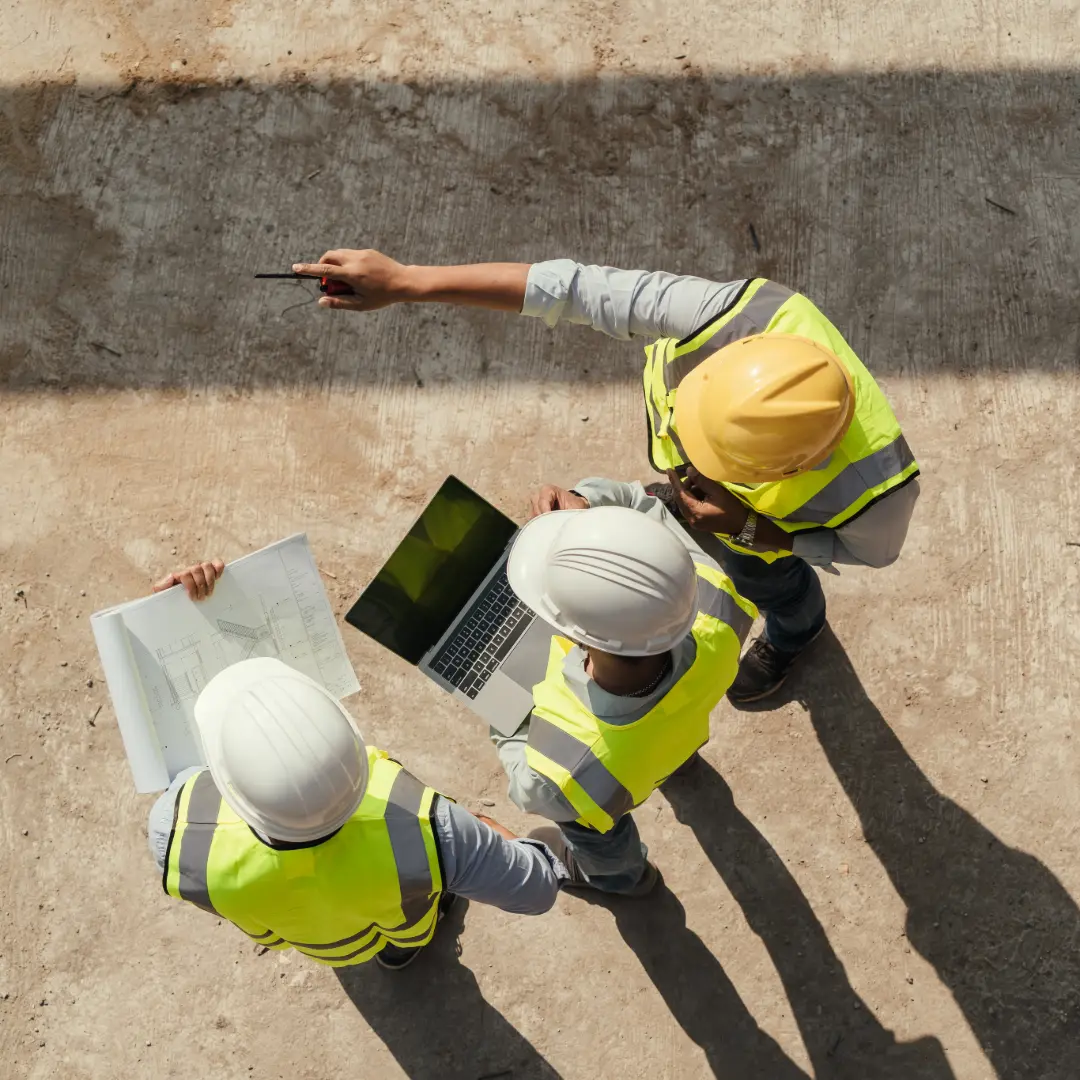
Managing a construction project in México requires planning, regulatory compliance, and cost control from the very beginning. The most costly problems arise before construction starts: poorly defined scopes, incomplete permits, and unrealistic budgets generate delays and cost overruns. Clearly defining the scope, organizing the team, managing risks, supervising changes, and using the right technology enables more efficient, safer, and more profitable projects, tailored to the Mexican context.
1. Define the project clearly from the start
The biggest mistake in Mexican construction does not happen during the build: it happens before the first worker shows up. A poorly written scope generates conflicts, rework, and inflated budgets from week one.
- Write a clear scope that specifies what is and what is not included in the project, with deliverables, quality criteria, and explicit assumptions.
- Develop a realistic budget and schedule, with time and cost buffers for contingencies (10–15% is a reasonable minimum).
- Conduct a feasibility analysis: land, access, climate, and availability of materials and labor in the area.
«A vague scope is the root cause of all conflicts on a job site.»
2. Comply with Mexican permits and regulations
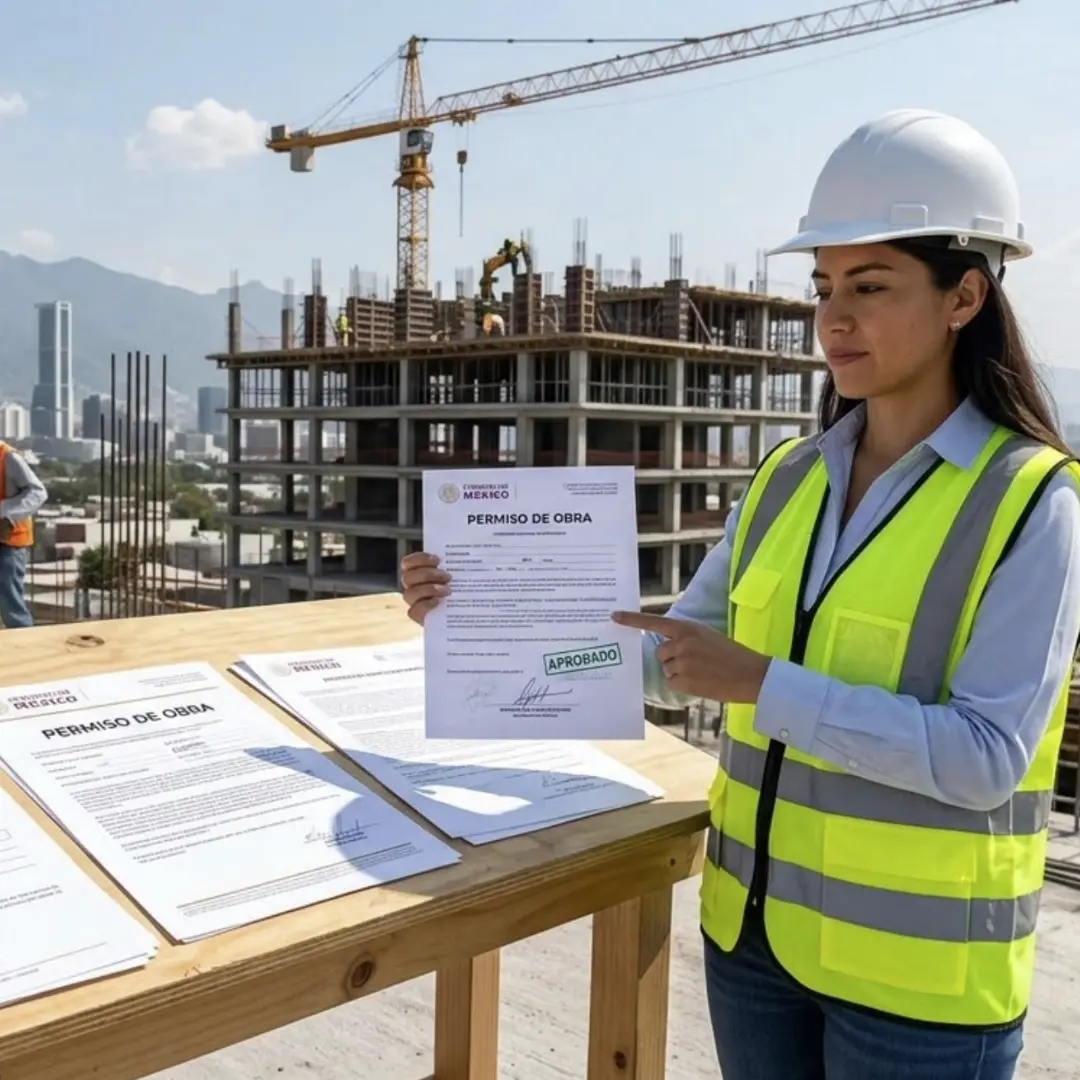
México has three overlapping layers of regulation: federal, state, and municipal. Ignoring any of them can result in a work stoppage, fines, or closure.
- Construction permit or license, land use authorization, civil protection opinion, and — where applicable — an environmental impact statement.
- Verify the local construction code, the Ley General de Equilibrio Ecológico (General Law on Ecological Balance), and occupational health and safety regulations.
- Build permit procedures into your schedule: review times by authorities are the most underestimated cause of delays in the country.
Practical tip: Schedule a pre-consultation meeting with the municipality before contracting executive design. Many cities have free guidance windows that can save you weeks of corrections.
3. Time and cost planning and control
Build your schedule by phase: executive design, permits, preliminary work, structure, MEP installations, finishes, testing, and closeout. Each phase should have clear milestones and committed dates.
- Do not use unrealistic programs: overly optimistic schedules generate delays of weeks and double-digit cost overruns.
- Perform weekly (on mid-size projects) or monthly tracking of physical progress vs. planned, and actual cost vs. budget.
- Correct deviations immediately; one week of ignored delay becomes a month of accumulated problems.
4. Team organization and communication
Role confusion is one of the most frequent and costly problems in Mexican construction projects, especially on mid-size sites without a formal structure.
- Define a simple structure: project manager, site supervisor or foreman, section leads, and safety, quality, and administration roles.
- Assign responsibilities in writing: who authorizes changes, who deals with the client, who handles progress billing, and who manages subcontracts.
- Use digital tools — project management software like Trowel, mobile apps, cloud repositories — to share drawings, progress updates, and changes in real time.
5. Risk management, quality, and safety
México has specific risks that do not appear in international project management manuals. Documenting them and planning ahead makes all the difference.
- Typical risk register entries: permit delays, material price fluctuations, heavy rain season, conflicts with neighbors or communities.
- Quality controls: drawing reviews, cross-discipline coordination, checklist by line item, testing before closing out phases.
- Site safety: emergency plans, mandatory EPP (personal protective equipment), ongoing training and supervision. Non-compliance leads to work stoppages, fines, and closure.
«A site accident does not only affect the worker: it can shut the project down for months.» Read the article on Personal Protective Equipment NOM-017-STPS-2008
6. Changes, contractors, and technology
Unrecorded "extras" are the number one cause of disputes between construction firms and clients in México. A clear change management procedure protects both parties.
- Define a formal process: change request, analysis of impact on time and cost, written approval before executing.
- Select subcontractors with proven capacity, clear contracts, and payments tied to verifiable progress milestones.
- Consider BIM for cross-discipline coordination and Lean Construction to reduce waste and rework.
On technology: You do not need the most expensive tool. Applications like Trowel can transform your team's coordination.
Best practices adapted to the Mexican market The following practices improve control, reduce uncertainty, and maximize results: Pre-construction investment ≥ 3% of budget Investing early in studies, engineering, and executive planning reduces design-stage errors and cost overruns during construction.
Project director from the design phase Integrating project management from the earliest stages aligns scope, cost, and schedule, avoiding rework and deviations.
Contingencies defined by risk type Assigning specific reserves (technical, financial, legal, and environmental) enables a more precise response to unexpected events.
Formal, traceable change control Every change must be assessed, approved, and documented to maintain control over budget and schedule impacts.
Strategic supplier diversification Reducing operational dependence improves resilience against delays, supply failures, or price fluctuations.
Compliance with NOM-031-STPS-2011 from the outset Early implementation of this standard ensures site safety, prevents sanctions, and strengthens preventive management.
Digital site log Centralizing information in real time improves traceability, communication, and decision-making.
Structured weekly meetings Sessions with an agenda, assigned owners, and follow-up ensure effective coordination and continuous progress control.
Lessons-learned management Documenting successes and failures allows for process optimization and raises organizational maturity in future projects.
Applying these strategies allows you to efficiently manage a construction project in México, reducing cost overruns and delays.
Conclusion
Managing a construction project in México requires more than following international methodologies: it means adapting every stage to local regulations, climate, ground conditions, and culture. Detailed planning, time and cost control, team organization, risk management, and proper change documentation are key to avoiding delays and disputes. Companies that systematize these processes and learn from each experience deliver projects that are safer, more efficient, and consistently on target.