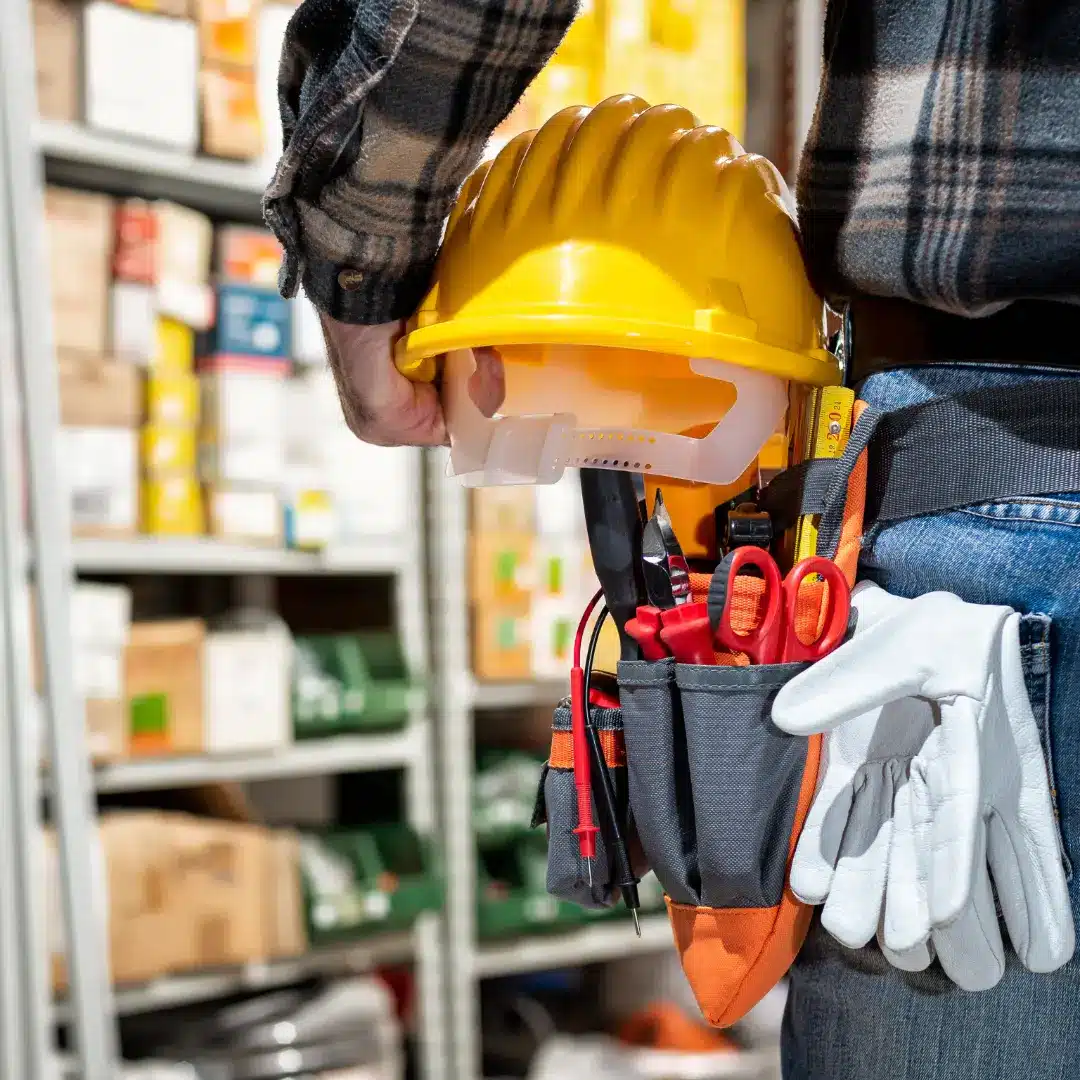
In construction, safety is an absolute priority. Workers are constantly exposed to risks due to the nature of the site environment: heavy machinery, working at height, hazardous materials, and adverse weather conditions. That is why Personal Protective Equipment (PPE) is essential for ensuring the safety and well-being of teams.
In this article, we explore what PPE is, why it is essential in construction, and how to select the right equipment to protect your team and comply with current regulations.
What Is PPE?
Personal Protective Equipment (PPE) is any equipment or accessory designed to protect workers from risks that may threaten their safety or health in the workplace. In construction, this equipment is mandatory and regulated by specific rules aimed at minimizing accidents and occupational illnesses.
Types of PPE in Construction
PPE is divided into categories based on the part of the body it protects and the type of risk workers face.
1. Head Protection
- Safety helmets: Protect against impacts, falling objects, and electrical discharges.
2. Eye and Face Protection
- Safety glasses: Prevent injuries from airborne particles, sparks, or hazardous liquids.
- Face shields: Provide additional coverage for the face.
3. Hearing Protection
- Earplugs or protective earmuffs: Reduce the impact of constant noise generated by heavy machinery.
4. Respiratory Protection
- Masks or respirators: Filter particles, dust, chemical vapors, or toxic gases.
5. Hand Protection
- Gloves: Designed for different tasks, from handling chemicals to working with heavy tools.
6. Body Protection
- High-visibility clothing: Increases visibility on sites with poor lighting.
- Safety harnesses: Essential for work at height.
7. Foot Protection
- Safety boots: With steel toecaps and anti-slip soles, ideal for preventing injuries from sharp objects or slipping.
Why Is PPE Important in Construction?
1. Accident Reduction
Proper use of PPE can prevent serious injuries and save lives. For example, a hard hat can make the difference between a minor bump and a fatal injury.
2. Legal Compliance
Occupational safety regulations require the use of PPE in construction. Failing to comply with these regulations can result in financial penalties and project suspension.
3. Improved Productivity
A safe working environment reduces the number of days lost to accidents or illness, ensuring projects progress without interruption.
4. Team Confidence
Investing in worker safety improves morale and builds trust in the company.
Tips for Choosing and Using PPE Correctly
- Assess Site Risks: Identify specific hazards to select the appropriate PPE.
- Ensure Quality: Make sure PPE meets safety regulations and standards.
- Train Personnel: Teach workers how to use and maintain PPE correctly.
- Inspect and Replace: Regularly inspect PPE and replace it if it is damaged or has expired.
Technology as an Ally in Safety
Tools like Trowel not only help with project management, but also with implementing safety measures. With its ability to organize tasks, record incidents, and assign responsibilities, Trowel facilitates supervision and compliance with on-site safety regulations.
Conclusion
Personal Protective Equipment (PPE) is essential for ensuring safety in construction. Implementing its proper use not only protects workers, but also ensures regulatory compliance and contributes to the success of projects.
Want to optimize safety on your sites? Start by investing in quality PPE and use tools like Trowel to manage your projects efficiently and safely.