Translucent cement: An innovative material in modern construction
Translucent cement is far more than a simple variation on conventional cement. Its ability to allow light to pass through is achieved by incorporating optical fibers or special resins mixed with the cement and aggregates. This process creates a material that retains the strength and durability of traditional cement while also possessing a unique quality: light transmission. As light passes through this type of cement, striking visual effects can be achieved — diffuse shadows, interplays of light, and the creation of brighter, more welcoming environments. These effects not only enhance the aesthetics of a space, but can also contribute to energy savings by reducing the need for artificial lighting during the day.
How is translucent cement made?
The manufacturing process is similar to that of conventional cement, but with some key differences. The basic mix includes Portland cement, aggregates (such as sand and gravel), water, and additives. However, the real innovation lies in the addition of optical fibers or transparent particles that allow light to filter through the material. Optical fibers — filaments of glass or plastic — are distributed evenly throughout the mix. These fibers have the ability to guide light from one end to the other, allowing the creation of cement panels that can be illuminated on one side and project that light on the other.
Advantages of translucent cement in architecture
Using this type of cement in architecture offers multiple advantages, both aesthetic and functional. Some of the main ones are:
Innovative aesthetics: The lighting effects that can be achieved with this material are impressive. Architects can play with natural light to create unique, modern environments.
Sustainability: By allowing natural light in, translucent cement can reduce dependence on artificial lighting, which in turn lowers energy consumption.
Versatility: This material can be used in a wide variety of applications, from walls and facades to decorative elements and urban furniture.
Strength and durability: Despite its delicate appearance, translucent cement retains the mechanical properties of conventional cement, making it suitable for use in robust structures.
Examples of translucent cement in architecture
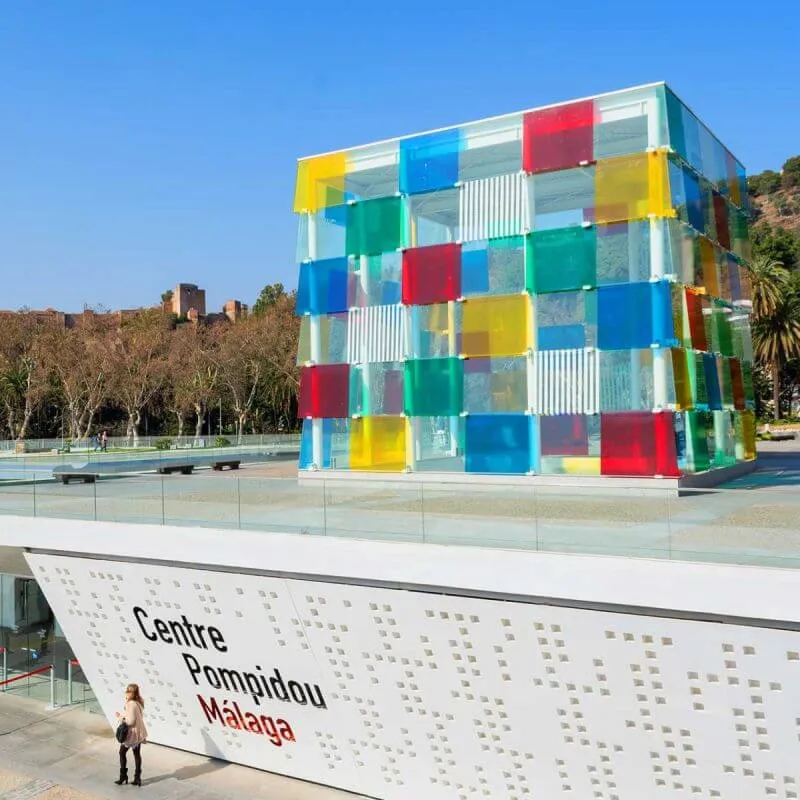
Translucent cement has been used in cutting-edge architectural projects around the world, and Spain is no exception. One of the most iconic examples is the Centre Pompidou in Málaga. This cultural center, known for its focus on contemporary art, uses translucent cement to create a facade that transforms with the light of day, offering a constantly changing and captivating visual experience for visitors. Beyond the Centre Pompidou, translucent cement has been employed in other projects such as museums, offices, and private residences. The material's versatility allows it to integrate into diverse architectural styles — from minimalism to more traditional architecture — always adding a touch of modernity and sophistication.
The future of translucent cement in construction
As the construction industry seeks more sustainable and aesthetically appealing solutions, translucent cement is poised to play a key role. Ongoing research is improving the properties of this material, making it more efficient in terms of light transmission and more accessible for use in large-scale projects. In the future, we are likely to see increased use of translucent cement in public infrastructure projects, where the combination of durability and aesthetics can improve both the functionality and the visual experience of urban spaces.
Conclusion
Translucent cement represents a significant advance in the search for building materials that combine functionality and aesthetics. With its ability to transform spaces through light, this material is positioning itself as a preferred option for architects and designers seeking to innovate and create works that are not only durable, but also visually striking. As its use expands, we are likely to see even more creative applications of translucent cement in architectural projects around the world.